
That Grinding, Squealing, or Banging Isn't Normal
You press the button on your garage door opener, and instead of a smooth, quiet operation, you hear something that sounds like a freight train rolling through your garage. Maybe it's a grinding noise. Maybe it's a high-pitched squeal. Or maybe it's a rhythmic banging that makes your neighbors look over every time you pull into the driveway.
Whatever the sound, one thing is certain — a healthy garage door shouldn't make a racket. If your garage door has started making unusual noises, it's trying to tell you something. And ignoring it usually means a more expensive repair down the road.
Here in Sumter, where humidity and temperature swings put extra stress on garage door components, noisy doors are one of the most common calls we get at Sumter Garage Door Co. Let's walk through the most common sounds, what causes them, and what you should do about each one.
Squealing or Screeching Sounds
A high-pitched squeal when your garage door opens or closes is one of the most common complaints homeowners bring to us. This sound usually points to one of two issues:
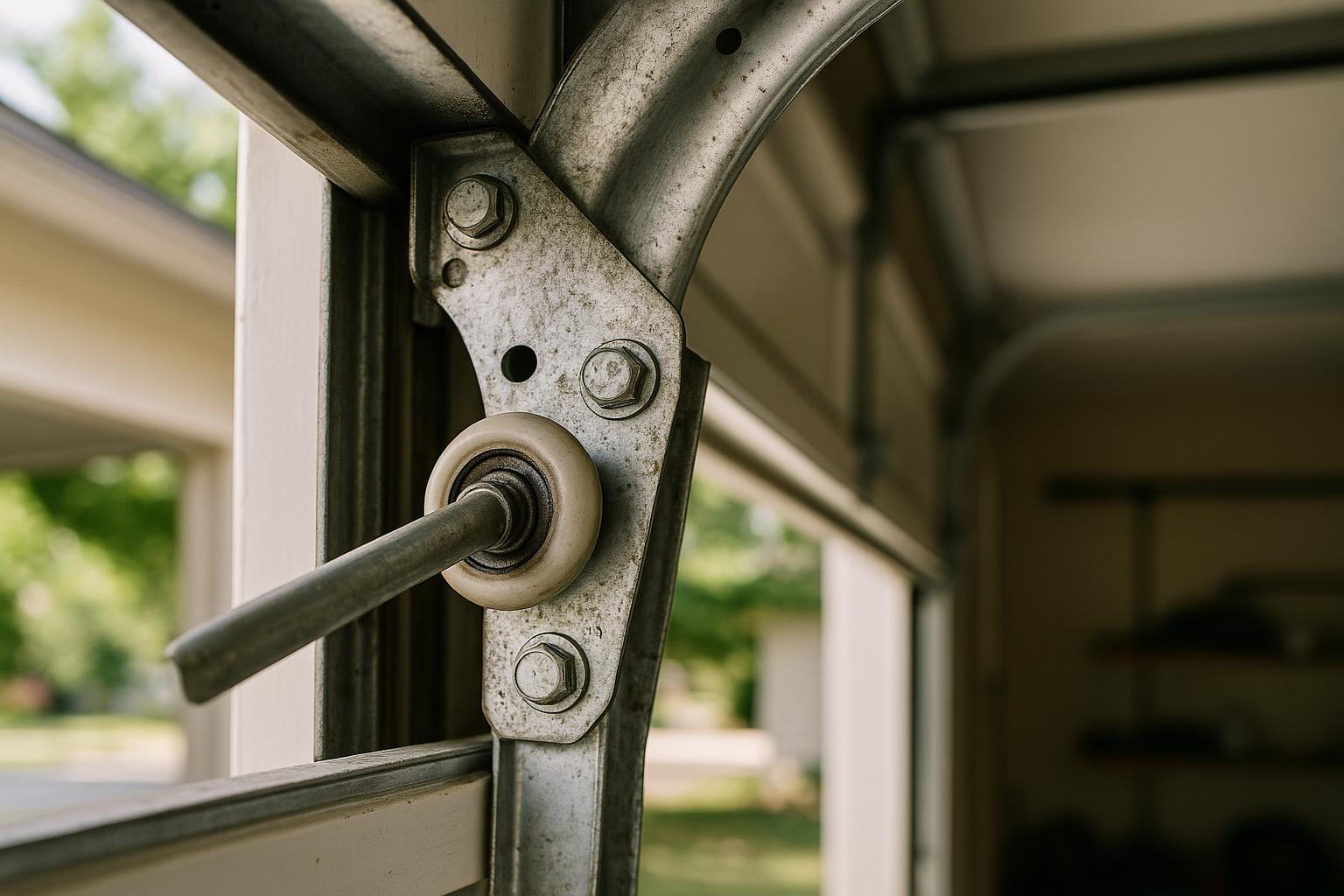
- Dry or worn rollers: Garage door rollers ride along the metal tracks every time the door moves. Over time, especially in the humid Sumter climate, the bearings inside those rollers can dry out or corrode. Metal rollers grinding against metal tracks without proper lubrication create that unmistakable screech.
- Lack of lubrication on hinges and bearings: Every moving part on your garage door needs periodic lubrication. When hinges, bearings, and pivot points go dry, metal-on-metal contact produces squealing noises that get worse over time.
The fix is often straightforward. Applying a garage door-specific lubricant to the rollers, hinges, and bearings can quiet things down immediately. However, if your rollers are visibly worn, cracked, or chipped, lubrication is just a temporary bandage — they need to be replaced.
A Quick Tip on Rollers
If you're tired of noisy rollers, consider upgrading to nylon rollers. They're significantly quieter than standard steel rollers and don't require as much lubrication. Many of our customers in Sumter and the surrounding areas like Dalzell and Wedgefield have made this simple upgrade and noticed a dramatic difference.
Grinding or Scraping Noises
A grinding or scraping sound is more concerning than a squeal. This noise typically means something is physically rubbing or dragging where it shouldn't be. Common causes include:
- Misaligned tracks: Your garage door tracks need to be properly aligned for the door to travel smoothly. If a track has shifted, bent, or loosened from the wall, the door can scrape against it as it moves. You might even see visible marks or metal shavings near the tracks.
- Worn-out bearings in the torsion system: The bearings in your torsion spring tube or end bearing plates can wear down over time. When they do, you'll hear a grinding noise coming from the top of the door.
- Debris in the tracks: It sounds simple, but dirt, leaves, small rocks, and even insect nests can accumulate in your garage door tracks. This is especially common in areas like Pinewood and Rembert where properties are surrounded by trees and natural debris.
If you notice grinding, inspect the tracks visually for obvious obstructions or bends. Cleaning the tracks and removing debris is something you can do yourself. But if the tracks are bent or misaligned, that's a job for a professional. Forcing a door along a damaged track can cause the door to jump off the track entirely, which creates a serious safety hazard.
Rattling or Vibrating Sounds
A rattling noise usually means something is loose. Garage doors are assembled with dozens of nuts, bolts, screws, and brackets, and the constant vibration of daily use can loosen hardware over time. Common culprits include:
- Loose track brackets or supports
- Loose chain on a chain-drive opener
- Worn or loose hinges
- A garage door opener that's vibrating against the ceiling mount
Tightening loose hardware is a relatively simple maintenance task, but be careful not to overtighten bolts on the tracks — this can pinch the tracks and restrict the rollers. If the rattling is coming from your opener, the drive mechanism or motor mount may need attention.
Chain-Drive Openers Are Naturally Louder
It's worth noting that chain-drive garage door openers are inherently noisier than belt-drive models. If your opener has always been loud and you've ruled out loose hardware, the noise may just be the nature of the system. Many homeowners — especially those with bedrooms above or adjacent to the garage — choose to upgrade to a belt-drive opener for quieter operation. This is a popular upgrade we perform for families near Shaw AFB and throughout Sumter.
Popping or Snapping Sounds
A loud pop or snap when your garage door starts moving can be startling. This sound is often related to:
- Torsion springs adjusting under load: As springs age, they can develop rough spots or slight deformities that cause them to pop as they wind and unwind.
- Sections of the door shifting: If the panels of your garage door aren't sitting flush or the hinges connecting them are worn, you may hear a popping or snapping sound as the sections flex during movement.
A single pop here and there may not be urgent, but if the sound is consistent and getting louder, have a technician inspect the springs and hardware before a component fails unexpectedly.
Banging When the Door Closes
If your garage door slams down the last few inches instead of closing smoothly, the issue is usually related to the springs or the opener's closing force settings. The springs are responsible for controlling the door's weight as it descends. When they lose tension or become unbalanced, the door essentially free-falls at the end of its travel, creating a loud bang.
This isn't just a noise problem — it's a safety concern and can damage the bottom section of your door, the weatherstripping, and even the garage floor over time.
When to Call a Professional
Some garage door noises can be resolved with basic maintenance — cleaning tracks, lubricating moving parts, and tightening hardware. But many noises are symptoms of problems that require professional tools and expertise to fix safely. You should call a garage door technician if:
- The noise is accompanied by the door moving unevenly or getting stuck
- You see visible damage to tracks, rollers, cables, or springs
- The noise started suddenly and is getting worse
- The door feels heavier than usual when you try to lift it manually
- You hear any noise coming from the springs or cables — these are under extreme tension and should never be adjusted by a homeowner
Keep Your Garage Door Running Quietly
A noisy garage door is more than a nuisance. It's your door telling you that something needs attention. Whether it's a simple lubrication issue or a sign of worn-out components, addressing the problem early saves you money and keeps your garage door operating safely.
At Sumter Garage Door Co, we help homeowners and businesses across Sumter, Shaw AFB, Dalzell, Wedgefield, Pinewood, and Rembert keep their garage doors running smoothly and quietly. If your door is making sounds it shouldn't, give us a call. We'll diagnose the problem, explain your options, and get things back to normal — no surprises, no runaround.