
That Frustrating Moment When Your Garage Door Won't Stay Closed
You press the button on your remote, the garage door starts its descent, and then — just before it reaches the floor — it reverses and goes right back up. You try again. Same thing. Maybe you try holding the wall button. Still reverses. It's one of the most common garage door complaints we hear from homeowners in Sumter, and it's more than just annoying. A garage door that won't close leaves your home, vehicles, and belongings exposed to weather, pests, and potential intruders.
The good news is that this problem usually has a straightforward explanation. The challenge is that several different issues can cause the same symptom. Let's walk through the most common reasons your garage door reverses before closing completely, what you can check yourself, and when it's time to call a professional.
Understanding Your Garage Door's Safety Systems
Before diving into specific causes, it helps to understand why your garage door is designed to reverse in the first place. Modern garage door openers are equipped with two key safety mechanisms mandated by federal law since 1993:
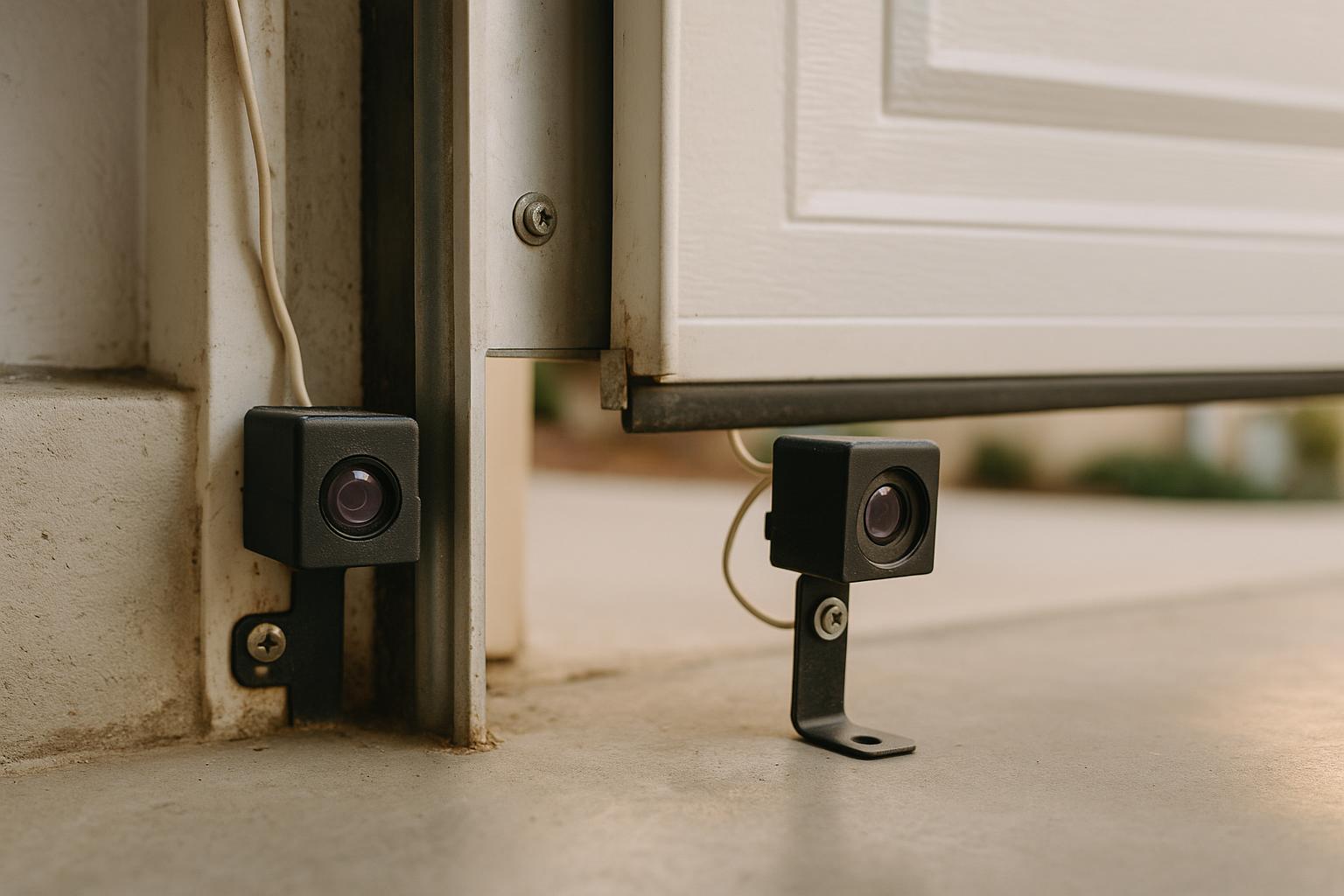
- Photo-eye sensors: These are the small devices mounted on either side of your garage door near the floor, about six inches up. They project an invisible beam across the doorway. If anything breaks that beam while the door is closing, the door reverses to prevent crushing a person, pet, or object.
- Auto-reverse mechanism: If the door physically contacts an obstruction while closing, the opener's force settings trigger a reversal. This prevents the door from pressing down on something — or someone — with its full weight.
Both systems exist to protect your family. When your door reverses unexpectedly, it's usually because one of these safety systems has been triggered — sometimes by an actual obstruction, and sometimes by a malfunction or misalignment.
Common Cause #1: Misaligned Photo-Eye Sensors
This is the number one reason we see garage doors reversing in homes across Sumter and the surrounding areas like Dalzell and Wedgefield. The photo-eye sensors must be precisely aligned to communicate with each other. If one gets bumped — by a bicycle, a lawnmower, a kid's toy, or even just vibration over time — the beam is broken, and the opener interprets this as an obstruction.
What to Check
Look at both sensors. Most models have a small LED light on each unit. Typically, one light is green (sending) and one is amber or green (receiving). If either light is blinking or off, the sensors are likely misaligned or malfunctioning. Gently adjust the sensor that appears off until the light becomes steady. Also check for dirt, cobwebs, or debris on the sensor lenses — a quick wipe with a soft cloth can sometimes solve the problem instantly.
Common Cause #2: Something Is Blocking the Door's Path
It sounds obvious, but you'd be surprised how often a small object near the base of the garage door causes a reversal. A broom handle, a shoe, a piece of debris, or even a buildup of leaves can break the photo-eye beam or physically obstruct the door. During South Carolina's humid summers, we also see cases where swollen weatherstripping or warped threshold seals create just enough resistance to trigger the auto-reverse.
What to Check
Clear the entire area around the garage door opening. Look at the ground along the full width of the door and remove anything within a few inches of the door's path. Check the bottom seal of the door for damage or deformity.
Common Cause #3: Incorrect Close-Force or Travel-Limit Settings
Your garage door opener has adjustable settings that control how far the door travels and how much force it uses to close. If the close-limit setting is too short, the opener thinks the door has reached the floor before it actually has and reverses. If the force setting is too low, the opener interprets normal resistance — like the weight of the door itself on an older system — as an obstruction.
What to Check
Most openers have small adjustment dials or screws on the back or side of the motor unit, typically labeled "limit" and "force." Your owner's manual will explain how to make small adjustments. However, we recommend being cautious here. Setting the force too high can create a genuine safety hazard, as the door may not reverse when it should. If you're unsure, this is a good time to call a technician.
Common Cause #4: Worn or Damaged Tracks and Rollers
Over time, the metal tracks that guide your garage door can become bent, corroded, or clogged with debris. Rollers can wear out, crack, or seize up. When this happens, the door encounters resistance as it moves, and the opener may interpret that resistance as an obstruction and reverse. Homeowners in older neighborhoods around Sumter often deal with this issue, especially if the garage door system hasn't been maintained regularly.
What to Check
Visually inspect the tracks on both sides of the door. Look for obvious bends, dents, or gaps. Check that the tracks are securely fastened to the wall. Examine the rollers — if they look cracked, flat, or won't spin freely, they likely need replacement. Lubricate the tracks and rollers with a silicone-based garage door lubricant, not WD-40, which can actually attract more dirt over time.
Common Cause #5: Broken or Worn Springs
Your garage door springs do the heavy lifting — literally. They counterbalance the weight of the door so the opener doesn't have to work as hard. When a spring is weakening or broken, the door becomes significantly heavier for the opener to manage. The opener may struggle to control the door's descent, and the increased resistance can trigger a reversal.
Spring issues are not a DIY repair. Garage door springs are under extreme tension and can cause serious injury if handled incorrectly. If you suspect a spring problem — the door feels unusually heavy when operated manually, or you notice a gap in one of the torsion springs above the door — contact a professional immediately.
Common Cause #6: Wiring or Electrical Issues
Less common but still worth mentioning: frayed wires, loose connections, or electrical shorts in the sensor wiring or opener circuit board can cause erratic behavior, including unexpected reversals. South Carolina's heat and humidity can accelerate wire degradation, especially in non-climate-controlled garages. Rodents chewing through wires is another issue we encounter in more rural areas like Rembert and Pinewood.
When to Call a Professional
If you've checked the sensors, cleared obstructions, and the door still won't close properly, it's time to bring in an experienced technician. Continuing to force the issue can cause additional damage to the opener, tracks, or door panels, turning a minor repair into a major expense.
At Sumter Garage Door Co, we diagnose reversing issues quickly because we've seen them hundreds of times. We'll identify the root cause, explain your options clearly, and get your door working safely — usually in a single visit. Whether you're near Shaw AFB or out in the Wedgefield area, we provide prompt, honest service you can count on.
Prevent Future Problems with Regular Maintenance
Most garage door reversal issues can be prevented with basic annual maintenance. A professional tune-up includes sensor alignment checks, lubrication of all moving parts, spring inspection, track adjustment, and opener testing. Think of it like an oil change for your garage door — a small investment that prevents costly breakdowns and keeps your family safe.
If your garage door is giving you trouble, don't ignore it. Contact Sumter Garage Door Co today and let us get it sorted out for you.